Streamlined Logistics: Choosing a Phoenix Inventory Management Software Developer
Standard inventory systems are rigid and hard to customize. Discover how a Phoenix inventory management software developer can build a tailored solution for your Valley warehouse.
For distributors, manufacturers, and e-commerce companies operating across the Phoenix Valley—from massive fulfillment centers in Goodyear to specialized tech hardware warehouses in Chandler—inventory is the center of gravity. Keeping track of stock levels across multiple locations, managing incoming supplier shipments, and coordinating rapid order fulfillment is a complex, high-stakes puzzle.
But many local businesses are forced to rely on generic inventory software or rigid e-commerce plugins that don't fit their physical warehouse layouts. These generic platforms often lack real-time multi-location syncing, struggle with barcoding integrations, and simply cannot integrate with local shipping APIs or custom billing systems.
To eliminate tracking errors, prevent stockouts, and streamline operations, smart Arizona distribution businesses are partnering with a local Phoenix inventory management software developer to build custom, mobile-friendly logistics solutions.
The Operational Taxes of Generic Inventory Software
When your inventory software doesn't perfectly match your physical warehouse workflows, your staff has to build manual workarounds. This mismatch introduces data lag, leading directly to lost products, phantom stock, and delayed shipping times.
Let's look at the differences between generic platforms and custom-engineered ERP software:
Operational Bottleneck
Generic Out-of-the-Box Software
Custom-Built Local Solution
Multi-Location Syncing
Delayed updates between central office and satellite warehouses
Real-time stock levels sync instantly across all locations
Barcode Scanning
Rigid integrations limited to expensive, proprietary scanners
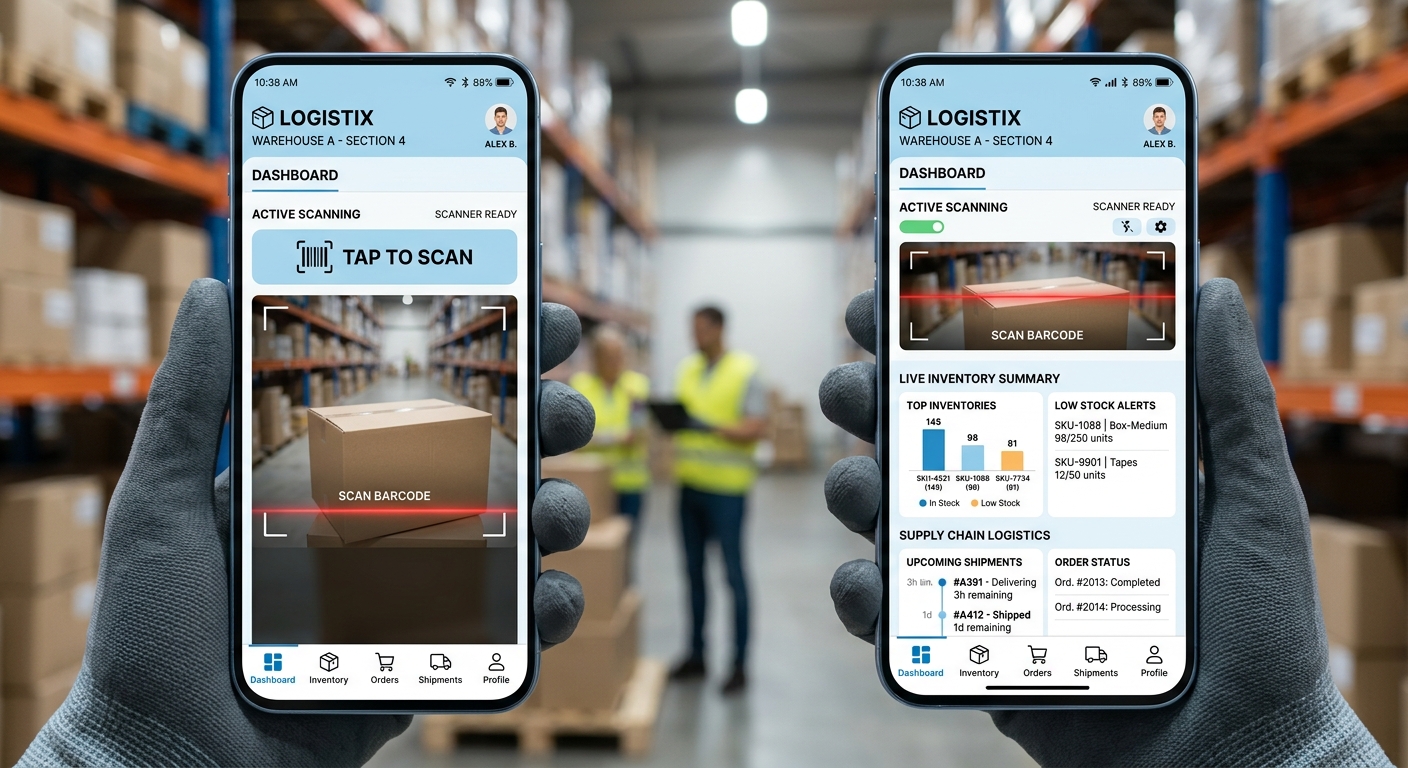
Runs on standard smartphones and tablets using responsive web camera tools
Custom Workflows
Forces you to change your physical routing to fit their database
Interface designed strictly around your warehouse picking paths
Automated Reordering
Manual, ad-hoc purchase orders drafted by employees
Intelligent thresholds trigger auto-drafted orders to suppliers
Eliminating the "Swivel Chair" Interface
A common problem in warehouse management is the "swivel chair" interface, where an employee has to look at a physical packing slip, swivel around to their desktop, and manually type SKU numbers into a database. Custom logistics software eliminates this entirely by putting scanning capabilities directly into the hands of the picker via a lightweight web application.
3 Pillars of an Optimized Warehouse System
When we design custom logistics applications and supply chain visibility tools at Larsen Code Labs, we focus relentlessly on eliminating friction at the point of action. Your warehouse staff needs to perform tasks quickly without getting bogged down by complicated interfaces or slow loading screens.
[ ] Mobile-First Barcoding: Enable field technicians or warehouse staff to scan incoming and outgoing stock using their standard smartphones or rugged tablets, completely eliminating paper logs.
[ ] Seamless CRM Integration: Connect your stock counts directly with your sales pipelines. When your sales team closes a massive deal in their custom CRM, the inventory levels and dispatch queues adapt automatically.
[ ] Intelligent Stock Alerts: Deploy lightweight AI agents to analyze historical purchase cycles, predict seasonal stockouts, and auto-generate orders before supply gets low. (Learn more about automation in our guide to AI consulting for small business in Phoenix).
By custom-building your inventory platform, you create a system that fits your physical operations perfectly, reducing costly fulfillment errors and helping your team move faster in the high-stakes Valley logistics market.
Frequently Asked Questions
What does an inventory management software developer do?
An inventory management software developer designs and builds custom tracking, logistics, and warehouse ERP applications. At Larsen Code Labs, we build scalable custom databases to log multi-location stock counts, engineer responsive mobile interfaces for barcode scanning, connect stock levels with external billing/shipping APIs, and create custom financial reports to help business owners optimize their supply chains.
Can we build custom barcode scanning into a web application?
Yes, absolutely. Modern web development frameworks allow us to securely connect a web application directly with a smartphone or tablet's built-in camera or external Bluetooth scanners. This means your warehouse picking team can scan barcodes, log shipments, and update inventory records in real-time directly from their existing mobile devices, with no expensive proprietary hardware required.
How does custom inventory software save our business money?
Custom inventory software eliminates manual paper entry errors, prevents stockouts of popular items, and minimizes the carrying costs of dead stock. By designing a system around your actual physical warehouse picking paths and automating purchasing thresholds, you significantly reduce employee labor hours, speed up order fulfillment, and increase your overall profit margins.