Architecture Matters: Working with a Phoenix SQL Database Developer
Is your application slow, crashing, or returning incorrect records? Discover how a professional Phoenix SQL database developer can optimize your schemas and scale your systems.
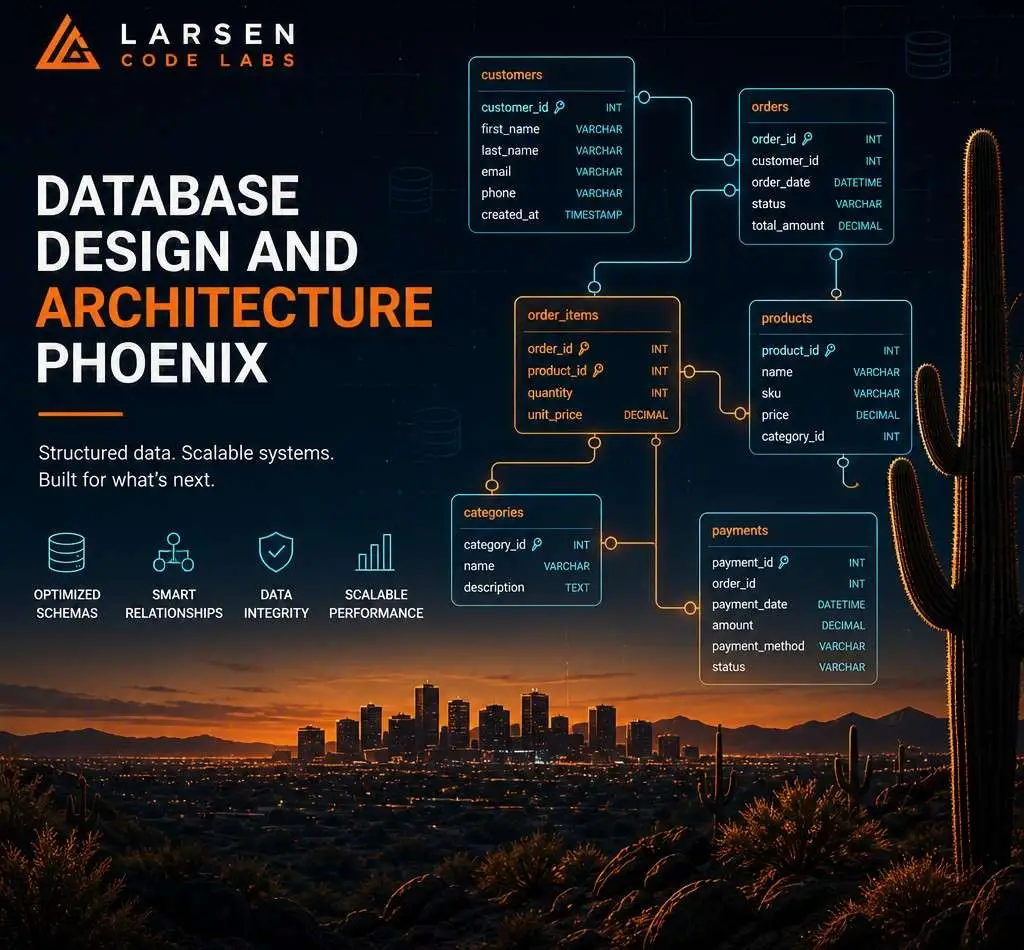
Is your application slow, crashing, or returning incorrect records? Discover how a professional Phoenix SQL database developer can optimize your schemas and scale your systems.
When a corporate web application loads slowly, most business owners assume they need faster internet, a bigger web server, or a complete redesign of their frontend interface. But more often than not, the true technical bottleneck is hidden deep beneath the surface: a poorly designed backend database.
As your Phoenix business grows, your application has to rapidly read, write, and filter millions of data rows. If your database schemas are unorganized, if your queries lack proper indexing, or if table relationships are circular, your software will start to freeze, throw timeout errors, and slow to an absolute crawl during peak business hours.
To ensure your corporate software is lightning-fast, responsive, and completely stable, smart Valley businesses hire a specialized, local Phoenix SQL database developer to audit, optimize, and scale their data architectures.
A healthy, well-engineered relational database is invisible to the user—it returns search results in milliseconds and syncs data flawlessly in the background. A struggling database, however, will quickly impact your bottom line through sluggish interfaces and corrupted user records.
Let's look at the symptoms of a stressed database and their engineered fixes:
| Database Symptom | Root Engineering Cause | Professional SQL Developer Fix |
|---|---|---|
| High Page Latency | Full-table scans; database reads every single row sequentially | Write targeted database indexes on high-traffic filter columns |
| Data Mismatches | Missing foreign key constraints or circular table schemas | Standardize schema normalization; implement relational integrity rules |
| Connection Timeout Errors | Unclosed connection pools; unoptimized, bloated query loops | Implement efficient connection pool limits and rewrite heavy SQL queries |
| System Locks | Deadlocks caused by simultaneous write operations | Redesign transactional query orders to prevent resource locks |

Imagine looking for a specific name in a massive phone book, but the names are in completely random order. You would have to read every single page. This is what a database does during a "full table scan." By simply writing a proper SQL index (acting like the alphabetical tabs on a phone book), a developer can drop query times from 10 seconds down to 50 milliseconds.
Whether you are building a custom CRM or a complex enterprise portal, structuring your relational tables correctly on day one is crucial.
Ensure your data engineering team adheres to these clean database guidelines:
At Larsen Code Labs, we utilize modern PostgreSQL and MySQL databases to build rock-solid corporate backends. By organizing your schemas and rigorously optimizing your SQL queries, we ensure your software runs with speed and precision, regardless of how much data you throw at it.
An SQL database developer designs, optimizes, and maintains relational databases (like PostgreSQL, MySQL, or SQL Server). At Larsen Code Labs, we analyze your data relationships, build organized table schemas, write high-performance backend SQL queries, establish secure access rules, and optimize database configurations to ensure your web applications remain extremely fast and reliable under heavy load.
When an application has a small number of users, even inefficient queries load quickly. But as your customer count grows, poorly indexed tables force your database to scan millions of rows for every single page load. By implementing proper SQL indexes, optimizing query logic, and setting up efficient database caching, a developer can immediately restore instant load speeds.
Yes, absolutely. Database optimization and refactoring can be performed safely on a live application. We set up an identical staging environment using a secure copy of your database, test all schema updates and query refactorings thoroughly, and deploy the optimized changes with zero downtime or risk to your live data.