Bridging the Gaps: What a Phoenix API Integration Expert Can Do for Your Business
Stop wasting time manually transferring data between software systems. Discover how a Phoenix API integration expert can automate your workflows and sync your tools.
Stop wasting time manually transferring data between software systems. Discover how a Phoenix API integration expert can automate your workflows and sync your tools.
Modern businesses run on dozens of disconnected cloud platforms. Your marketing team uses HubSpot, your finance team relies on Stripe or QuickBooks, your customer support lives in Zendesk or Slack, and your fulfillment operations use custom local spreadsheets.
But when these specialized software systems don't talk to each other, a silent tax is levied on your business. Employees spend hours manually copying and pasting information between tabs, leading to data entry errors, delayed response times, and general operational drag.
To eliminate this manual friction, smart Arizona businesses are turning to a local Phoenix API integration expert to build clean, automated data bridges that connect their software applications seamlessly.
When databases are disconnected, operational efficiency suffers immediately. Let's look at the hidden bottlenecks that arise when your core platforms live in data silos, and how custom API (Application Programming Interface) bridges can solve them:
| Operational Bottleneck | Manual Workaround | API-Automated Solution |
|---|---|---|
| New Lead Processing | Rep manually copies website form data into the CRM | Lead details sync instantly, notifying the sales team in Slack |
| Invoice Matching | Bookkeeper matches payment processor logs with bank records | Stripe webhooks auto-update QuickBooks invoices in real-time |
| Order Dispatch | Dispatcher reads CRM wins and types addresses into logistics tools | Winning a deal in the custom CRM triggers automated route planning |
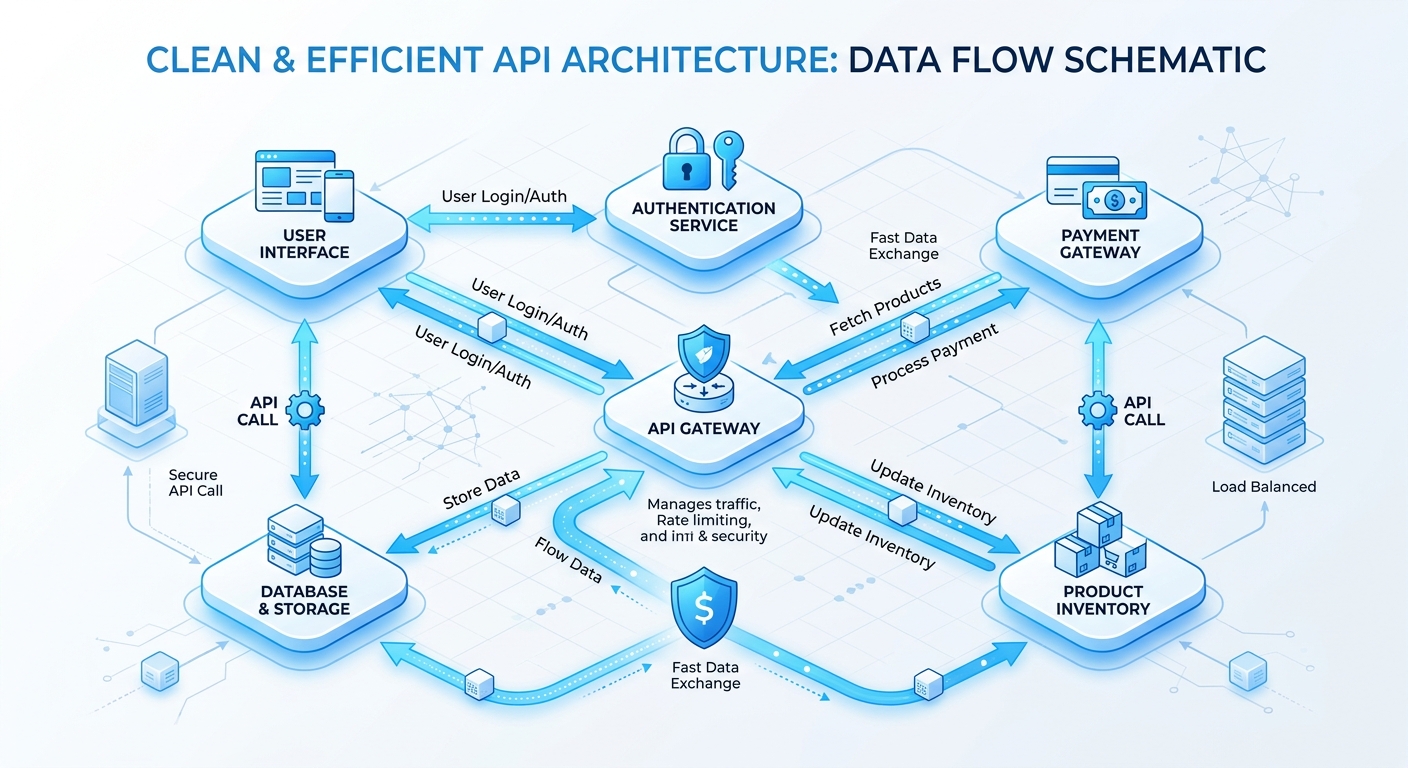
Many businesses start automating their workflows using off-the-shelf tools like Zapier or Make. While these are excellent for simple, low-volume tasks, they quickly become expensive as your business scales. Moreover, they lack the flexibility to handle complex data transformations, multi-step logic, or secure integrations with local databases. A custom API integration eliminates monthly per-task billing and provides a robust, enterprise-grade connection tailored exactly to your business logic.
Connecting your tools doesn't require rebuilding your entire technical stack from scratch. Often, a few targeted API integrations can free up dozens of employee hours every single week.
Here is a quick checklist to identify high-priority integration targets in your company:
By automating these connections, you reduce the margin for human error and allow your team to focus on high-value, strategic work rather than rote administration.
An API integration expert designs and builds custom software bridges that allow different platforms, databases, and cloud tools to share data automatically. At Larsen Code Labs, we build secure, lightweight middle-tier integrations (using REST or GraphQL) that parse, transform, and synchronize data in real-time, eliminating manual duplicate entries and streamlining corporate workflows.
While Zapier is great for simple, low-volume automations, it can quickly become expensive as task counts rise. Additionally, pre-built platforms often lack the flexibility needed to handle complex data transformation rules, custom business logic, or highly secure local databases. A dedicated custom API bridge provides complete flexibility, lower long-term operating costs, and enhanced security.
Extremely secure, when built by experienced engineers. We implement modern, enterprise-grade security protocols, including OAuth 2.0 authorization, secure webhook handshakes, and end-to-end data encryption. This is especially vital for businesses handling sensitive medical, financial, or proprietary corporate data in the Southwest. (Learn more about our standards from our Phoenix web app security consulting guide).